Changes in the market, new technologies, and the search for new trading methods are some of the things that keep the prop trading scene on its feet. Prop traders need to stay ahead of the curve and use innovative, forward-thinking trading methods if they want to do well in this competitive market. This article will talk about the newest, most innovative trends in prop trading that are causing these changes. It will also talk about some new trading strategies and technologies that can give you an edge over your competitors and help you reach your trading goals faster.
By using the capital of a proprietary firm instead of your own, you can trade financial assets. This is called proprietary trading, or prop trading for short. Prop traders often agree on a profit split so that they can make money for themselves and the firm.
The stock market is so volatile these days that it might soon be challenging to trade using only traditional methods. It is important to be aware of and embrace proprietary trading trends and improvements, as well as advanced trading methods, because they can provide many benefits including:
Many trends come and go in the prop trading space, but currently, these groundbreaking trading developments and trends are shaping the prop trading landscape:
Every year, new trends emerge in the prop trading industry. A number of these proprietary trading innovations are acquiring popularity, including emerging strategies:
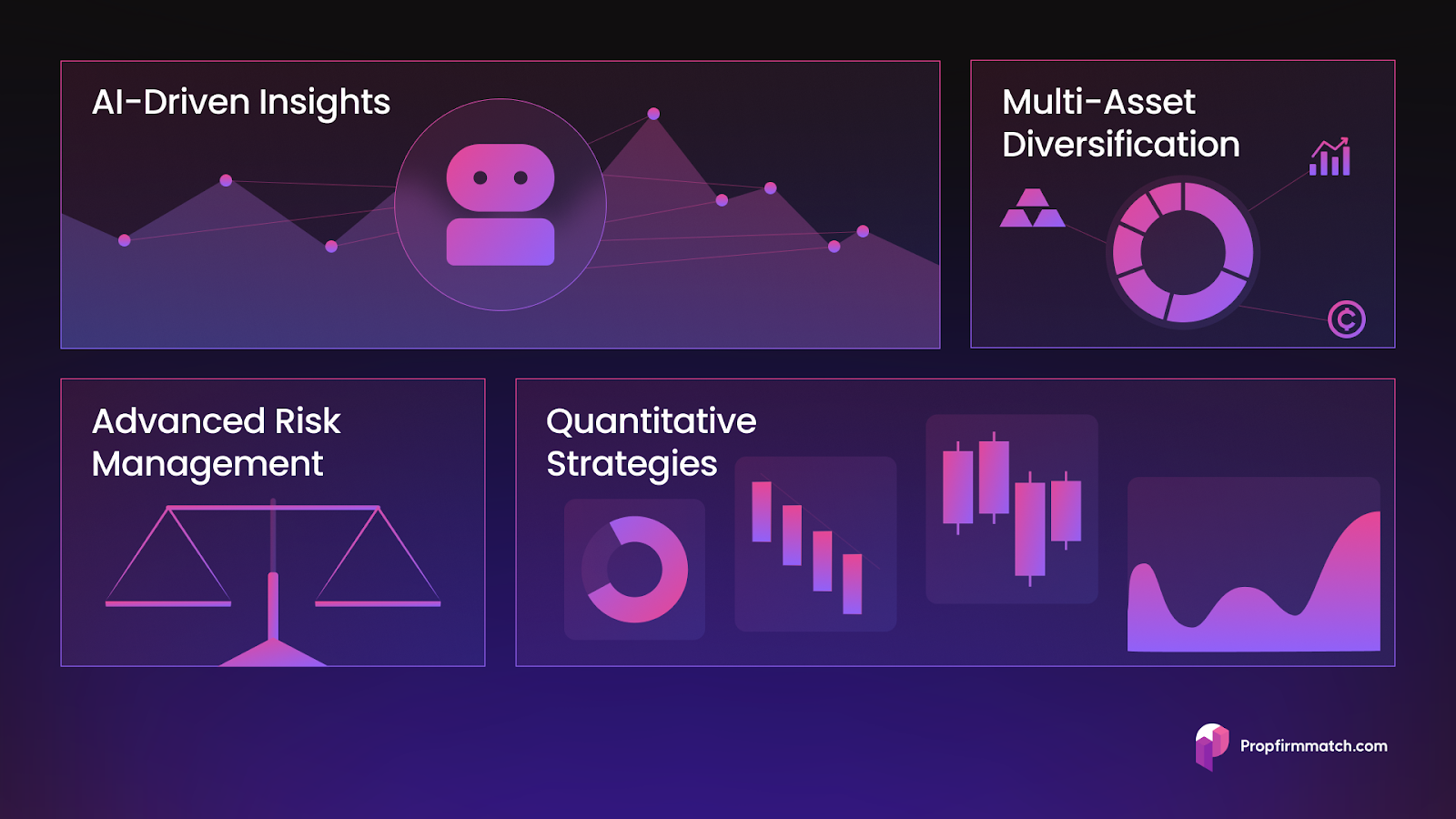
Prop traders have added a variety of asset classes, such as commodities, indices, and cryptocurrencies, to their trading portfolio. Because of this strategic diversity, traders are able to take advantage of the unique opportunities presented by each market.
Traders can not only increase their potential for profit but also establish a more balanced risk profile by trading across multiple asset classes.
This multi-asset approach mitigates risks and improves overall stability in trading operations by reducing reliance on any single market.
The trading industry is experiencing a surge in the development and implementation of personalized trading algorithms. Traders can implement more effective and personalized strategies by customizing algorithms to align with their risk preferences, specific market preferences, and trader profiles.
This personalization not only fits the unique skills and goals of each trader, but it also makes it easier for them to adapt to changing market conditions. The creation of platforms that let traders make and use their own customizable algorithms has also made it easier for more people to get access to advanced trading tools.
Traders can use these tools to make automated processes, improve their strategies, and more accurately react to changes in the market. Because of this, traders get a big edge over the market by using these personalized algorithmic solutions to improve performance and possibly make more returns.
Artificial Intelligence (AI) and Machine Learning (ML) are transforming the decision-making landscape through their incorporation in proprietary trading. Prop traders are utilizing the capabilities of these sophisticated technologies to conduct real-time analyses of huge quantities of data, consequently revealing patterns and insights that were once unavailable to humans.
AI and ML enable the development of sophisticated algorithms that can adapt to changing market conditions, therefore enhancing both trade execution and strategy optimization. These systems can improve overall trading efficiency, reduce human error, and predict market trends with greater accuracy by continuously learning from new data.
Prop traders are able to make more informed decisions and achieve better outcomes by staying ahead in highly competitive markets, facilitated by this technological advantage.
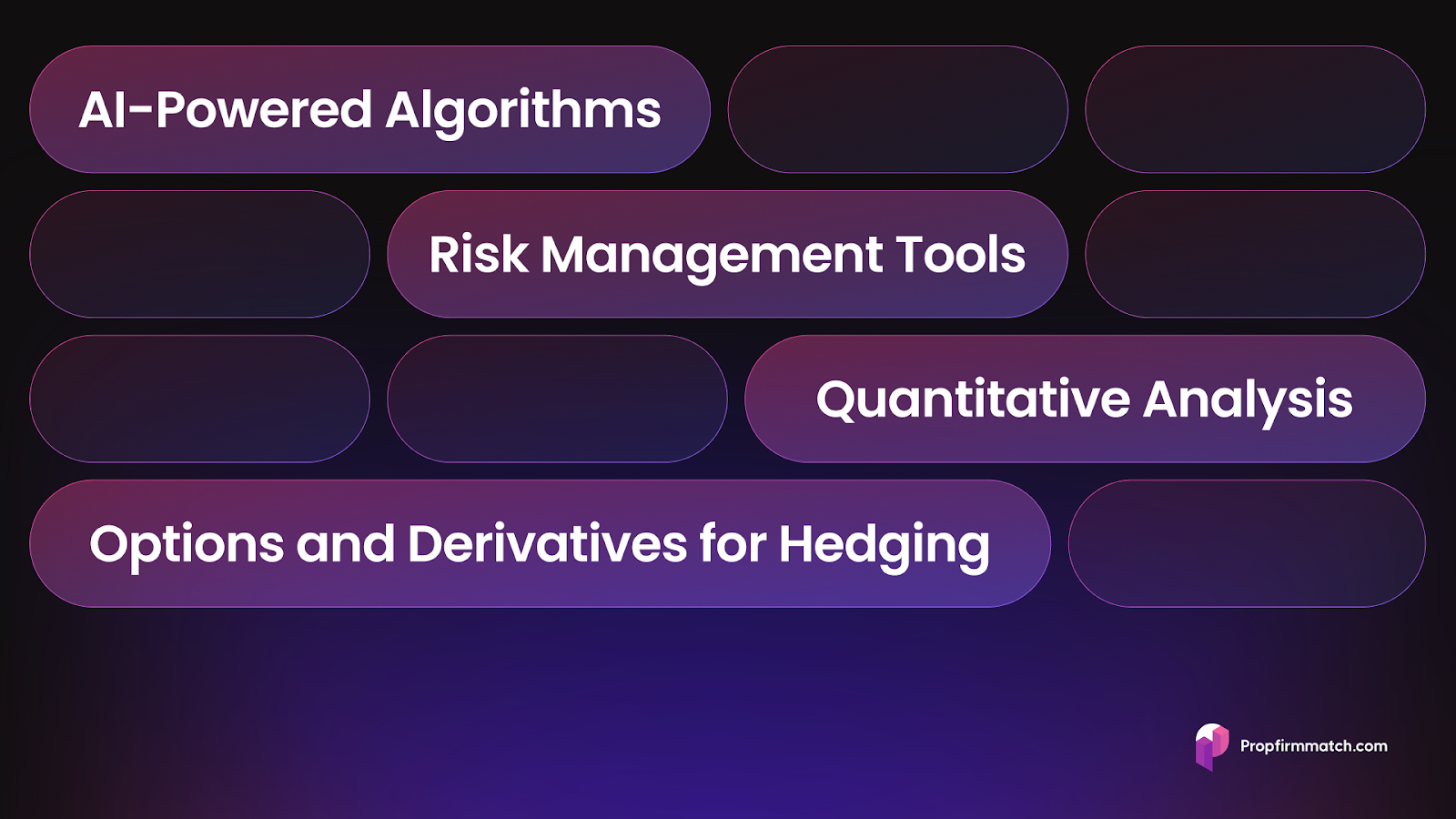
Many prop traders are starting to experiment with using options and derivatives to manage risk and hedge their portfolios. It’s a practice which hedge fund managers on Wallstreet have been using for decades, but only recently are prop firm traders starting to experiment with them. These trailblazing trading solutions offer more flexibility and better risk management for traders
When being a prop trader, you need to consider that regulations vary across jurisdictions and can heavily change the way you trade including:
The future of prop trading is a bright one that’s likely to see a lot more of the following:
Which trading strategy works the most accurately?
There isn't just one "most accurate" way to trade because the market and buyers are always changing. To be successful, you need to find a plan that fits your level of risk tolerance, the way you trade, and your view of the market.
How do you come up with a plan for trading?
In the end, it comes down to market research, backtesting, and managing risk. Figure out your trading goals and how much risk you are willing to take first. Then, look into and try out different trading methods until you find the right one for you.
How risky is it to trade on prop firms?
Prop trading comes with a lot of risks, such as the chance of losing money, the market going up and down, and problems with regulations. Always do your research before putting money into something.
What kinds of strategies do prop traders use?
Prop traders use a lot of different methods, such as algorithmic trading, technical analysis, fundamental analysis, and quantitative analysis. It all comes down to how skilled the trader is, how the market is doing, and the firms' rules and regulations.
Keep Reading

Perpetual futures, also known as perps, are derivative contracts that let traders go long or short without a scheduled expiry date. This guide explains what perpetual futures are, how crypto perps work, funding rates, leverage, liquidation, and the key differences between perpetual futures, traditional futures, spot trading, and crypto CFDs, including how perps are being used in prop trading.
Oct 5, 2026 • 20 min read
Futures Rollover Explained: When to Roll Contracts and What Prop Traders Should Check
Futures rollover can affect liquidity, slippage, chart levels, drawdown room, and prop firm rule compliance. This guide explains when to roll futures contracts, how to track volume and open interest, and what funded traders should check before moving to the next active contract.
Sep 14, 2026 • 23 min read
Best Futures Prop Firms to Compare in 2026
Futures prop traders have more firms, platforms, account types, and payout structures to compare than ever before. This guide compares eight futures prop firms that appeared across multiple Prop Firm Match signals, helping traders evaluate each firm by structure, rules, drawdown type, contract limits, platforms, payouts, and trader activity before choosing an evaluation.
Aug 17, 2026 • 17 min read

Reviews & Rankings
News & Insights
Tools & Resources
Programs & Rewards
200 Loyalty Points Welcome Bonus.
Sign up free to claim points, unlock rewards, save favorite firms, and start earning more through reviews and platform activity.