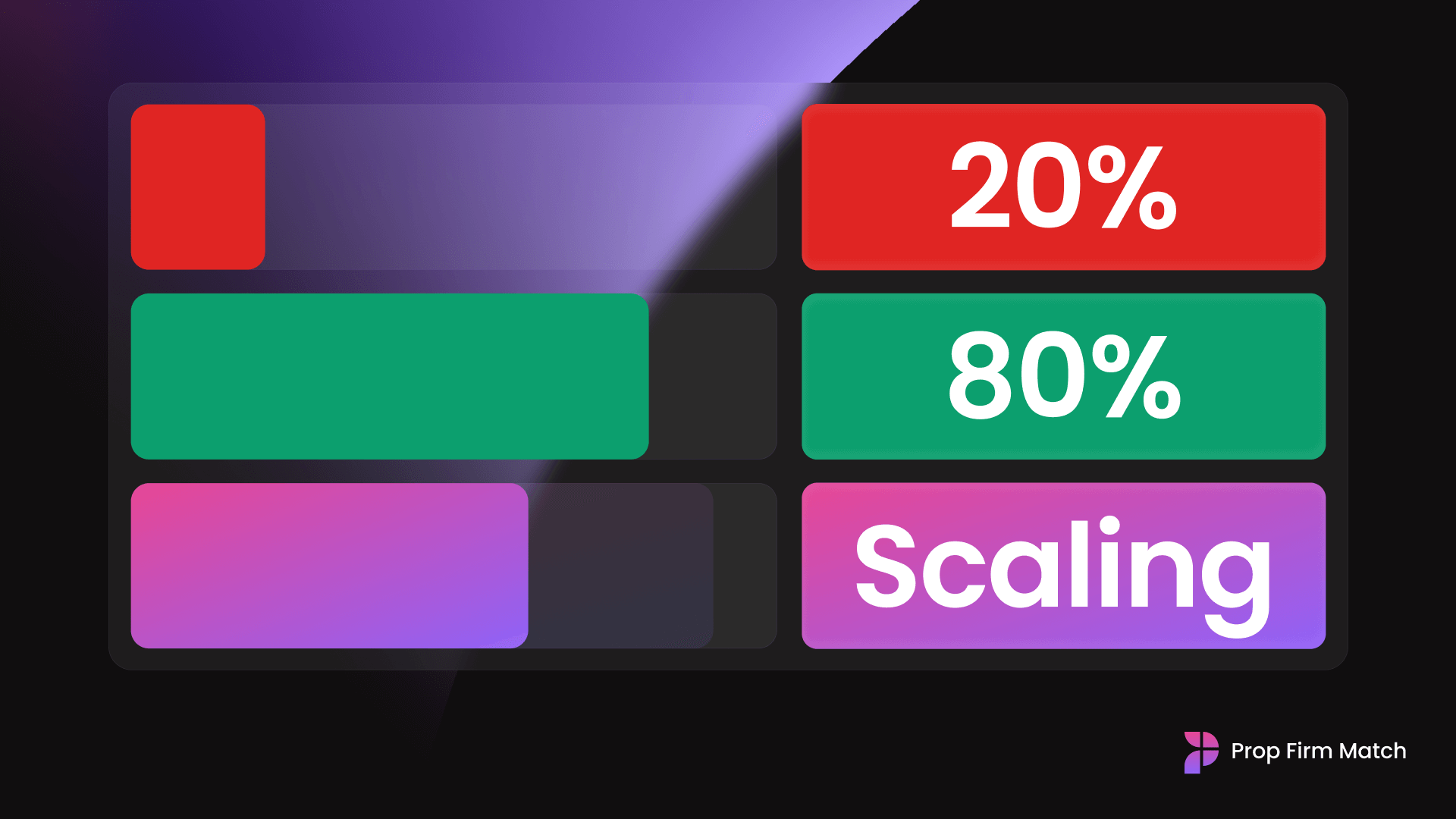
Profit splits define how earnings are divided between a trader and the proprietary trading firm that provides the capital. In funded trading programs, this ratio is a key factor in a trader’s potential payout and a major point of comparison between firms.
For example, in a 70/30 split, the trader keeps 70% of the profits earned on a funded account. The firm keeps the remaining 30%.
While a high profit split can seem attractive at first glance, it should always be considered alongside other factors like challenge difficulty, evaluation rules, and long-term scaling potential.
Profit-sharing ratios aren’t one-size-fits-all. Several elements can affect how much of your profit you keep:
Firms that offer higher profit splits often have stricter evaluation processes to reduce risk. Those with simpler or instant funding models might offer lower splits to offset higher pass rates.
Some firms offer a base profit split—say, 70%—that increases as you hit milestones or show consistency. This performance-based scaling can reward long-term traders with higher earnings over time.
Industry norms differ by market. For example:
The associated risk, liquidity, and infrastructure costs of the asset class often play a role in these differences.
The path to funding matters. Multi-step challenges (e.g., two or three phases) tend to come with higher profit splits. One-step challenges or instant funding options may offer lower splits due to reduced screening.
You can compare profit splits across firms directly on our Prop Firm Challenge Comparison page. It’s a useful starting point if you're trying to narrow down options based on payout structures.
Here’s how Prop Firm Match can help you narrow it down:
Doing your homework upfront can help you avoid surprises later—and find a funding partner that fits how you trade.
Profit splits are just one piece of the puzzle. A generous percentage sounds great—but only if the path to getting paid is fair and achievable.
That’s where Prop Firm Match helps. Instead of sorting through endless sites, you can compare firms directly, read real reviews, and choose one that fits your trading goals.
Keep Reading

Perpetual futures, also known as perps, are derivative contracts that let traders go long or short without a scheduled expiry date. This guide explains what perpetual futures are, how crypto perps work, funding rates, leverage, liquidation, and the key differences between perpetual futures, traditional futures, spot trading, and crypto CFDs, including how perps are being used in prop trading.
Oct 5, 2026 • 20 min read

Futures Rollover Explained: When to Roll Contracts and What Prop Traders Should Check
Futures rollover can affect liquidity, slippage, chart levels, drawdown room, and prop firm rule compliance. This guide explains when to roll futures contracts, how to track volume and open interest, and what funded traders should check before moving to the next active contract.
Sep 14, 2026 • 23 min read

Best Futures Prop Firms to Compare in 2026
Futures prop traders have more firms, platforms, account types, and payout structures to compare than ever before. This guide compares eight futures prop firms that appeared across multiple Prop Firm Match signals, helping traders evaluate each firm by structure, rules, drawdown type, contract limits, platforms, payouts, and trader activity before choosing an evaluation.
Aug 17, 2026 • 17 min read

Reviews & Rankings
News & Insights
Tools & Resources
Programs & Rewards
200 Loyalty Points Welcome Bonus.
Sign up free to claim points, unlock rewards, save favorite firms, and start earning more through reviews and platform activity.