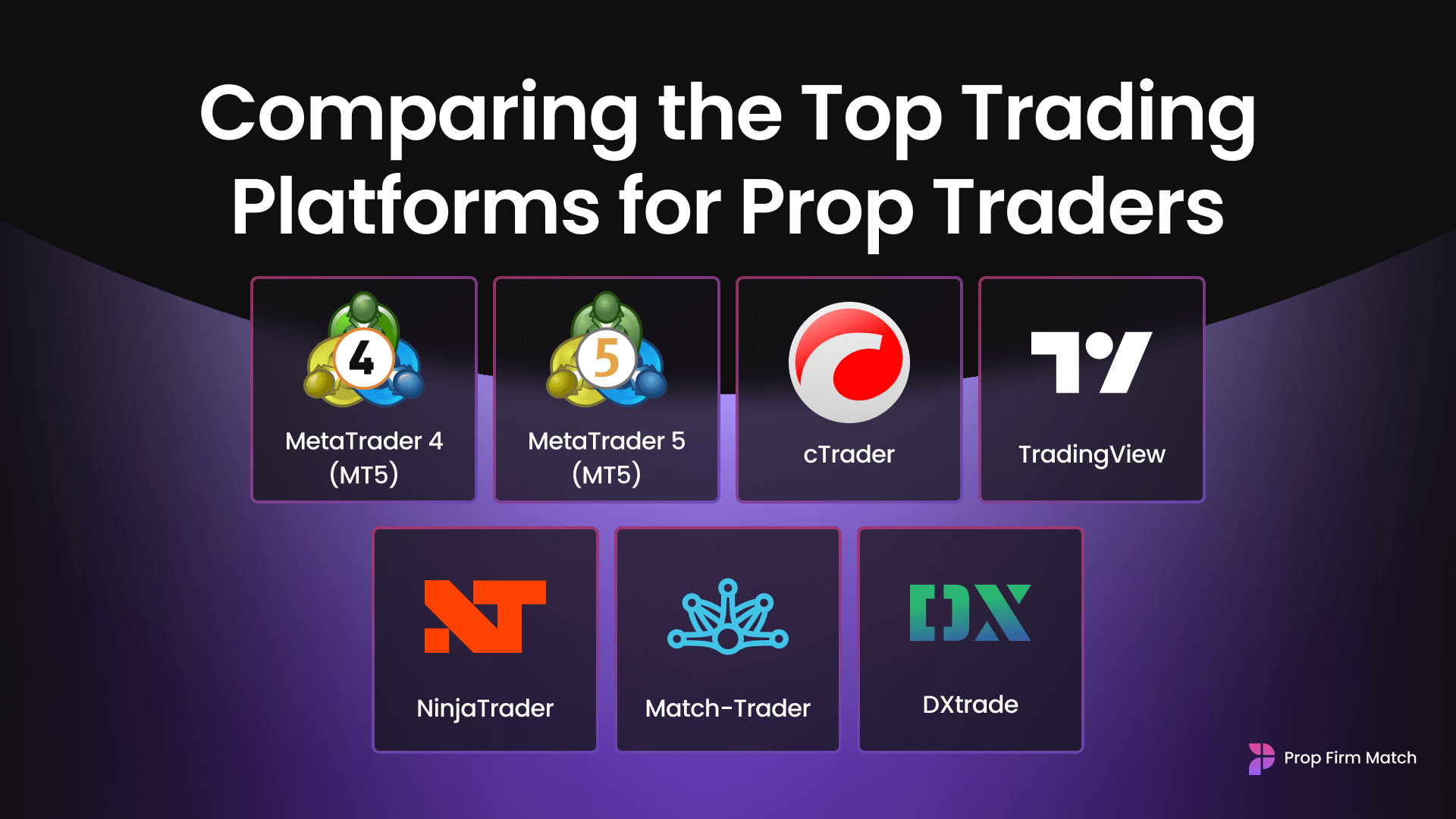
Choosing the right trading platform is a big decision for prop traders because it poses a significant impact on their trading performance and efficiency. Trading platforms connect traders to the financial markets and give them the tools they need to make trades, study data, and keep track of their accounts. The internet offers an array of trading platforms to choose one, each one having their own pros and cons. This blog looks at the best platforms for prop traders and compares their features, ease of use, and suitability.
MetaTrader 4 is a household name among forex traders, renowned for its simplicity and effectiveness. Its widespread adoption by prop firms stems from its stability, customization options, and extensive community support.
Best For:
Forex-focused prop traders who rely heavily on automated strategies and technical analysis.
Cons:
MT5 is the successor to MT4, offering enhanced features and multi-asset capabilities. It has gained traction among prop firms seeking a more comprehensive trading solution.
Best For:
Prop traders looking for a multi-asset trading environment with advanced order management and faster execution.
Cons:
cTrader is designed with a modern interface and robust features, making it a favorite among traders who prioritize usability and execution transparency.
Best For:
Prop traders who prefer a sleek, modern platform with advanced execution transparency.
Cons:
TradingView is widely known for its exceptional charting capabilities and social trading features. While not a standalone trading platform, it integrates seamlessly with many prop firms and brokers.
Best For:
Prop traders who prioritize charting, strategy testing, and community-driven insights.
Cons:
NinjaTrader stands out as a leading platform for futures trading, offering professional-grade tools for order execution, backtesting, and advanced charting.
Best For:
Futures-focused prop traders seeking advanced backtesting and execution tools.**
Cons:
Match-Trader is an innovative trading platform offering a web-based solution with strong analytical tools, making it ideal for prop trading firms focused on flexibility and accessibility.
Best For:
Prop traders looking for a seamless, web-based trading experience with strong analytical tools.**
Cons:
DXtrade is a modern trading platform offering advanced tools for brokers and prop firms, with a focus on flexibility, risk management, and multi-asset support.
Best For:
Prop traders seeking a highly flexible platform with strong risk management features.**
Cons:
Choosing the best trading platform ultimately comes down to your trading style, goals, and the asset classes you focus on. Whether you value simplicity, automation, advanced charting, or multi-asset flexibility, there’s a platform designed to match your needs. From the tried-and-true MetaTrader options to modern solutions like cTrader and Match-Trader, prop traders have more powerful tools than ever before. Take the time to test what works best for you—because the right platform isn't just a tool; it's your edge in the markets.
Keep Reading
Futures Rollover Explained: When to Roll Contracts and What Prop Traders Should Check
Futures rollover can affect liquidity, slippage, chart levels, drawdown room, and prop firm rule compliance. This guide explains when to roll futures contracts, how to track volume and open interest, and what funded traders should check before moving to the next active contract.
Sep 14, 2026 • 23 min read
Best Futures Prop Firms to Compare in 2026
Futures prop traders have more firms, platforms, account types, and payout structures to compare than ever before. This guide compares eight futures prop firms that appeared across multiple Prop Firm Match signals, helping traders evaluate each firm by structure, rules, drawdown type, contract limits, platforms, payouts, and trader activity before choosing an evaluation.
Aug 17, 2026 • 17 min read

Funded Accounts for Swing Trading: Pros, Cons, and Key Rules to Check
Swing trading can work inside a funded account, but only when the firm’s rules support the trader’s holding period, risk model, and trade frequency. This guide explains the pros and cons of funded swing trading, including overnight and weekend holding, drawdown calculations, news risk, swap fees, minimum trading days, payout conditions, and what traders should check before buying an evaluation.
Aug 17, 2026 • 12 min read

Reviews & Rankings
News & Insights
Tools & Resources
Programs & Rewards
200 Loyalty Points Welcome Bonus.
Sign up free to claim points, unlock rewards, save favorite firms, and start earning more through reviews and platform activity.