Instant funding prop firms offer traders a way to skip the usual evaluation process and access trading capital right away. With no preliminary testing phase, this option can appeal to a range of traders, from those with proven strategies who want to start quickly to those eager for a shot at large profits without the wait. The instant access comes at a cost, though, with higher fees and a reduced profit share due to the increased risk for the firm.
Prop firms with instant funding allow traders to access trading capital immediately, bypassing the lengthy evaluation process. This option is appealing to those who want to begin earning right away. However, take note that before you can withdraw your earnings, some firms may require traders to achieve a specific profit percentage. This condition ensures that traders demonstrate a level of performance before accessing their profits.
Evaluation programs provide traders with a structured pathway to enter the world of prop trading. By allowing individuals to test their trading skills without a significant upfront fee, these programs cater to various experience levels. Participants engage within a defined framework that includes specific rules and performance metrics, which helps clarify expectations and maintain focus. While this approach offers a practical way to refine strategies and gain valuable experience, it also requires dedication and discipline to succeed in demonstrating consistent performance.
Typically, an evaluation program starts with you trading an evaluation account and meeting certain profit targets and risk limits. If you meet these requirements, you earn a funded account. It’s a slower approach but often comes with lower fees.
Here’s a quick side-by-side comparison to help you decide:
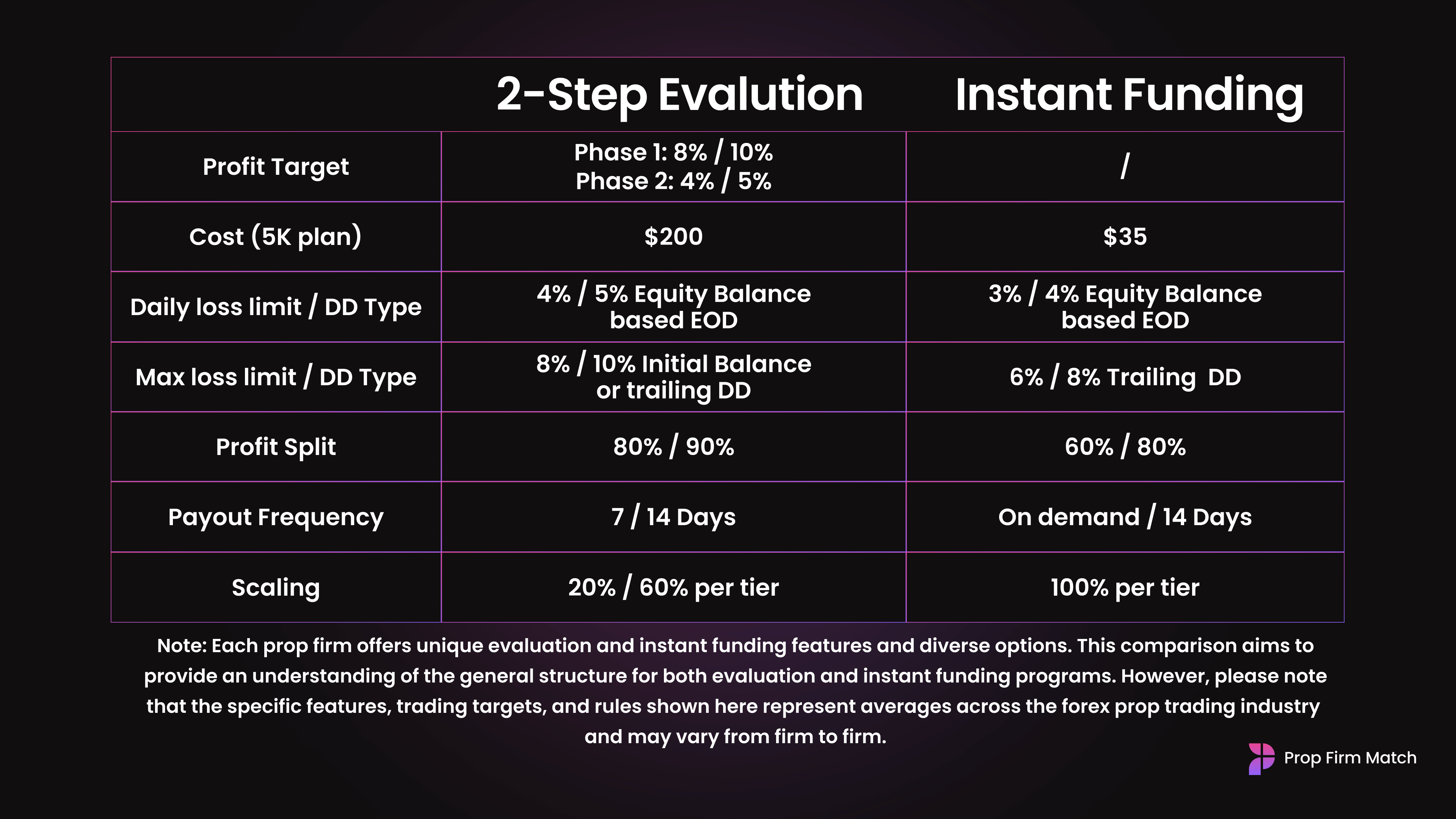
If you’re a confident, experienced trader and prefer immediate access to capital, Instant Funding Programs let you get trading right away, even if they’re a bit pricier. But if you’re new to trading, want to minimize your costs, or are comfortable with a slower start, Evaluation Programs offer a more gradual, less costly path with room to grow.
Whether you go for the quick entry of instant funding or the steady challenge of an evaluation, both options can open doors to more trading capital. Consider your goals, experience, and risk tolerance, and you’ll be ready to pick the route that aligns best with your trading style.
Keep Reading

Futures Rollover Explained: When to Roll Contracts and What Prop Traders Should Check
Futures rollover can affect liquidity, slippage, chart levels, drawdown room, and prop firm rule compliance. This guide explains when to roll futures contracts, how to track volume and open interest, and what funded traders should check before moving to the next active contract.
Sep 14, 2026 • 23 min read
Best Futures Prop Firms to Compare in 2026
Futures prop traders have more firms, platforms, account types, and payout structures to compare than ever before. This guide compares eight futures prop firms that appeared across multiple Prop Firm Match signals, helping traders evaluate each firm by structure, rules, drawdown type, contract limits, platforms, payouts, and trader activity before choosing an evaluation.
Aug 17, 2026 • 17 min read

Funded Accounts for Swing Trading: Pros, Cons, and Key Rules to Check
Swing trading can work inside a funded account, but only when the firm’s rules support the trader’s holding period, risk model, and trade frequency. This guide explains the pros and cons of funded swing trading, including overnight and weekend holding, drawdown calculations, news risk, swap fees, minimum trading days, payout conditions, and what traders should check before buying an evaluation.
Aug 17, 2026 • 12 min read

Reviews & Rankings
News & Insights
Tools & Resources
Programs & Rewards
200 Loyalty Points Welcome Bonus.
Sign up free to claim points, unlock rewards, save favorite firms, and start earning more through reviews and platform activity.