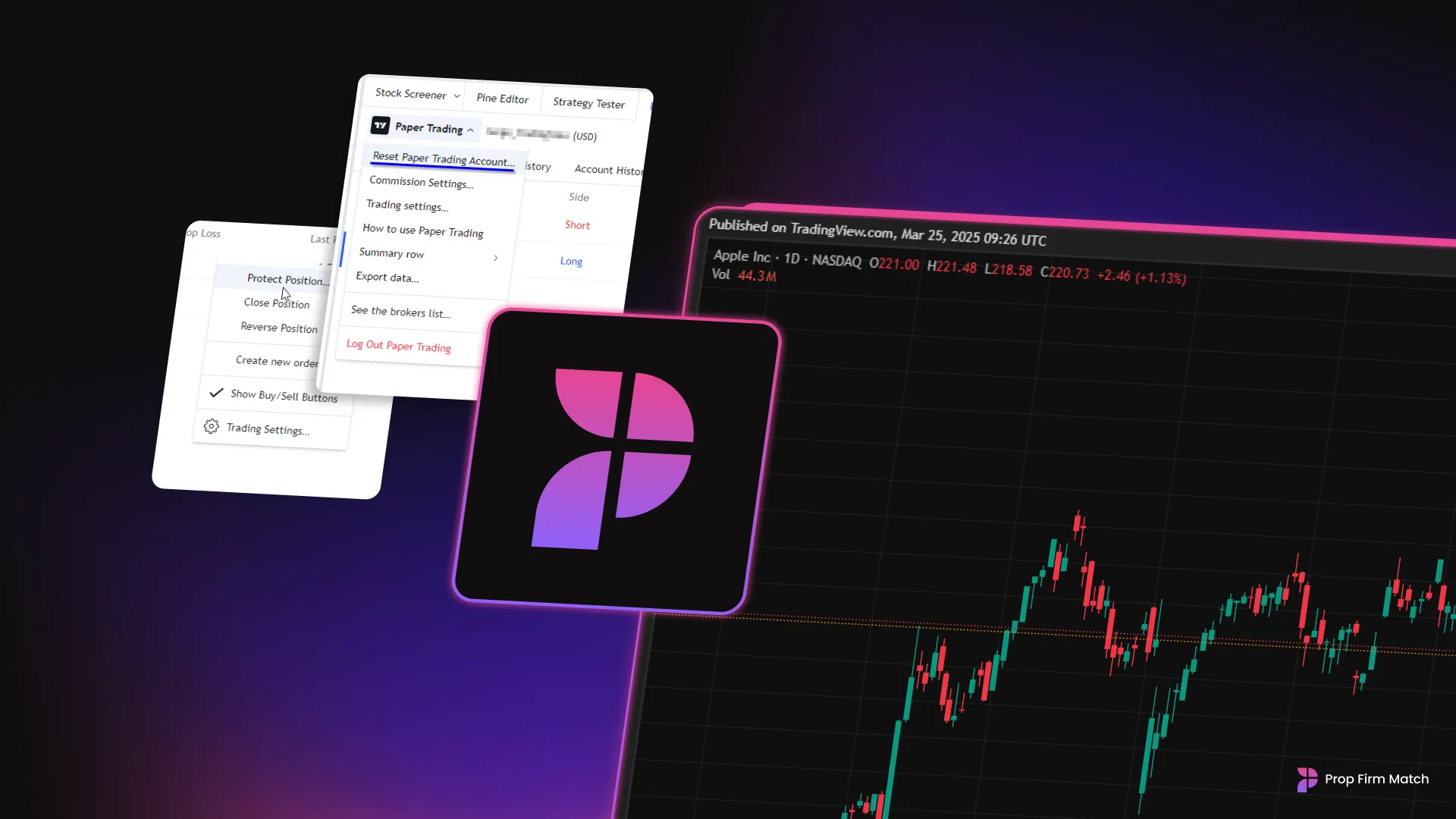
One pivotal tool that prop trading firms and aspiring traders are leveraging to hone skills, evaluate performance, and ensure compliance is simulated trading. This comprehensive look into simulated trading aims to explore its role, underscoring benefits, addressing drawbacks, and illuminating its application in trader evaluation.
Simulated trading, a fundamental concept within proprietary trading, offers an immersive virtual experience where both aspiring and seasoned traders can refine their skills without risking their hard-earned capital. Within this virtual environment, one finds a remarkable replication of real market conditions. This emulation provides a secure and risk-free platform for traders to cultivate their strategies, bolster risk management acumen, and become well-versed in the trading tools and platforms integral to proprietary trading firms.
The evaluation process within proprietary trading firms extensively relies on simulated trading environments. These firms frequently organize trading challenges wherein traders are allocated simulated accounts equipped with specific profit targets and drawdown thresholds. These challenges serve as a litmus test for a trader's ability to navigate risks, meet performance objectives, and adhere to the firm's trading protocols. These facets play a pivotal role in the recruitment process. Notably, firms like FTMO have instituted a meticulous two-step verification procedure, which prominently features simulated trading, to further gauge the competence of traders before granting access to actual funds.
In this section, we delve into the potential advantages of simulated trading, encompassing aspects like market familiarization, performance evaluation, risk management practice, and community interaction among others.
Simulated trading, while beneficial, does have some drawbacks that traders should be aware of. Here are some of the disadvantages associated with simulated trading:
Simulated benefits span from offering a risk-free learning arena, strategy testing medium, and a mechanism for performance evaluation, to aiding firms in the competent assessment and recruitment of traders. Nonetheless, it is imperative to navigate simulated trading with an awareness of its limitations, such as a potential disconnection from the emotional and financial realities of live trading and other drawbacks. Engaging with simulated trading judiciously, by leveraging its advantages and being mindful of its shortcomings, can pave the way for skill development for traders, laying a solid foundation for future endeavours in the live markets.
Keep Reading

Futures Rollover Explained: When to Roll Contracts and What Prop Traders Should Check
Futures rollover can affect liquidity, slippage, chart levels, drawdown room, and prop firm rule compliance. This guide explains when to roll futures contracts, how to track volume and open interest, and what funded traders should check before moving to the next active contract.
Sep 14, 2026 • 23 min read
Best Futures Prop Firms to Compare in 2026
Futures prop traders have more firms, platforms, account types, and payout structures to compare than ever before. This guide compares eight futures prop firms that appeared across multiple Prop Firm Match signals, helping traders evaluate each firm by structure, rules, drawdown type, contract limits, platforms, payouts, and trader activity before choosing an evaluation.
Aug 17, 2026 • 17 min read

Funded Accounts for Swing Trading: Pros, Cons, and Key Rules to Check
Swing trading can work inside a funded account, but only when the firm’s rules support the trader’s holding period, risk model, and trade frequency. This guide explains the pros and cons of funded swing trading, including overnight and weekend holding, drawdown calculations, news risk, swap fees, minimum trading days, payout conditions, and what traders should check before buying an evaluation.
Aug 17, 2026 • 12 min read

Reviews & Rankings
News & Insights
Tools & Resources
Programs & Rewards
200 Loyalty Points Welcome Bonus.
Sign up free to claim points, unlock rewards, save favorite firms, and start earning more through reviews and platform activity.