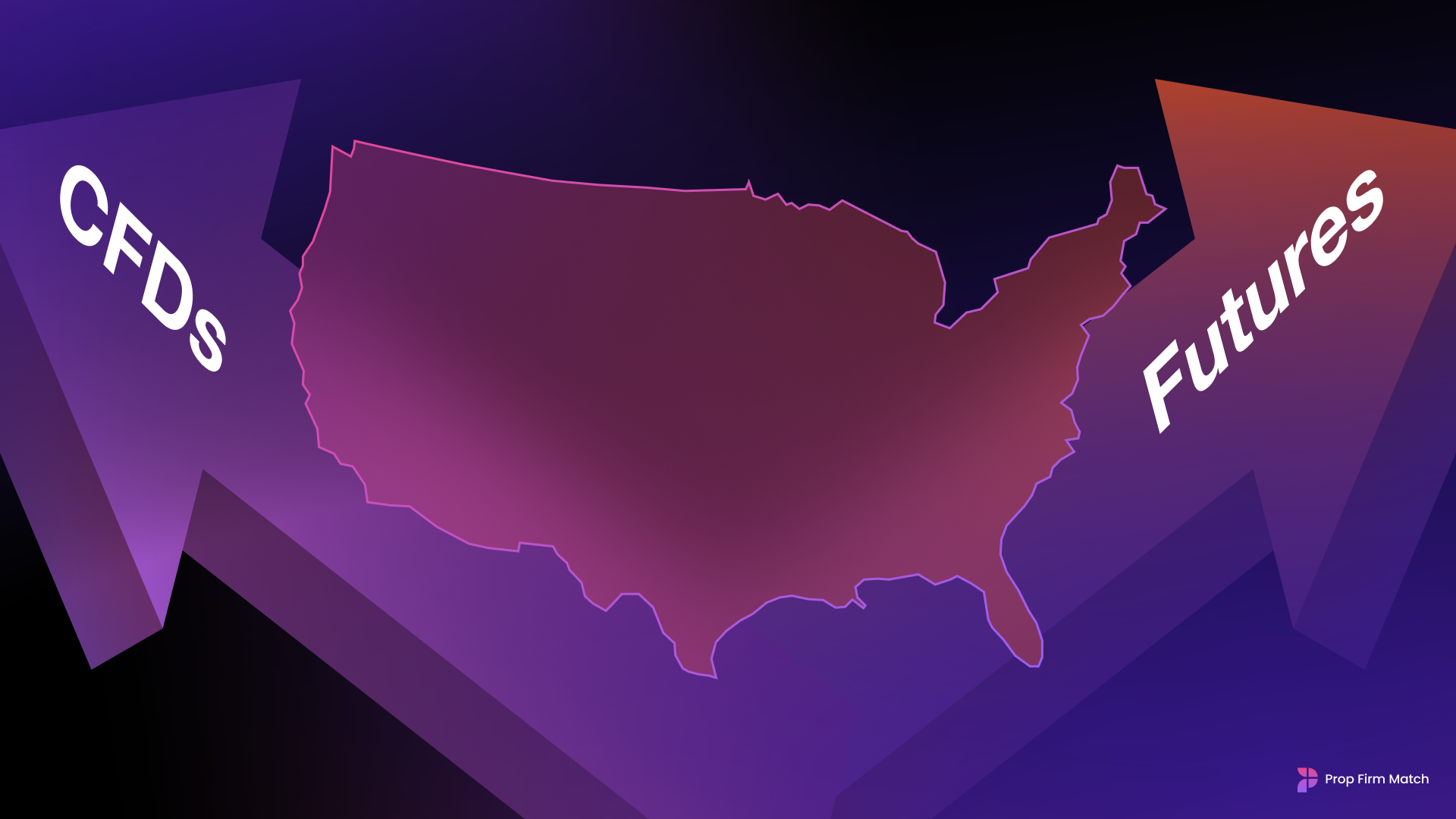
Funded trading looks different in the United States than it does in many other regions.
Some prop firms that are widely available internationally don’t accept U.S. traders at all. Others accept U.S. traders only under separate U.S. pathways or platform constraints, which can change the experience compared to what non-U.S. traders see.
Because of this, “best” for U.S. traders usually comes down to availability and structure (drawdown rules, payout mechanics, platforms, and evaluation format) rather than brand popularity alone.
Because the most-favorited firms and best-selling challenges on Prop Firm Match change over time, traders may also want to review current weekly or monthly best sellers and the most-favorited prop firms for an up-to-date view.
If you search “best prop firms USA,” you’ll usually mean one of two things:
This guide helps you compare both categories without relying on rankings.
A U.S.-accessible prop firm is one that allows U.S. residents to participate in its programs, whether through:
To see what’s available right now, you can review Prop Firm Match’s list of CFD prop firms that allow traders from the United States or the list of futures prop firms that allow traders from the United States
Because eligibility changes over time, it’s also worth checking the list of CFD prop firms that restrict traders from the United States of America before purchasing any evaluation.
U.S. availability is usually shaped by two realities: how retail derivative rules work, and what platforms are operationally available.
The CFTC explains that it is unlawful to offer foreign currency futures and option contracts to retail customers unless the offeror is a regulated financial entity enumerated in the Commodity Exchange Act.
This is one reason many forex-style prop structures that work globally don’t translate cleanly into U.S. onboarding.
Even when a firm accepts U.S. residents, the trading experience can differ because platform infrastructure and availability may not be identical for U.S.-based traders.
Practical tip: if a firm’s program depends heavily on a specific platform, confirm the platform is available and stable from a U.S. IP before paying.
Not all U.S.-accessible funded programs are built the same way. Most fall into one of these two categories:
Choosing between these models depends on whether you trade futures by preference, or whether your strategy is FX-specific and requires a forex-style environment.
Use this checklist before paying for any evaluation:
This is the fastest way to avoid buying a program that doesn’t match your trading behavior.
Most programs enforce risk using variations of:
Trailing drawdowns can be especially restrictive for strategies that experience normal pullbacks.
Payout rules often vary in ways that matter more than marketing:
If payout requirements impose behavior constraints you can’t realistically follow, the “best deal” becomes expensive quickly.
Most programs fall into:
Each format changes the balance between cost, flexibility, and the path to payout eligibility.
Each format changes the balance between cost, flexibility, and the path to payout eligibility. If you want a deeper breakdown of how these models differ, you can review Instant vs Evaluation vs Challenge: Which Funded Model Is Best?
Before paying for any evaluation, confirm:
This prevents one of the most common “dead-end purchases” U.S. traders run into.
This topic shifts faster than most “Best Funded…” categories. The changes usually happen in these areas:
This is why it helps to use verified lists and re-check the rules before purchasing.
Common mistakes include:
A large number of “failed challenges” are structural mismatches, not strategy problems.
U.S.-accessible funded trading programs tend to suit traders who:
They may be less suitable for traders who rely on high flexibility, highly discretionary sizing, or approaches that conflict with tight drawdown models.
Some programs use simulated trading environments with real payouts, while others may use live capital structures. In both cases, withdrawals are real when payout conditions are met. The key difference is the account infrastructure, not whether payouts are paid.
Sometimes. Some U.S.-accessible programs (especially U.S.-specific pathways) may require U.S. tax documentation before rewards/withdrawals are processed. Confirm the firm’s payout and onboarding requirements before purchasing.
U.S. rules create friction for certain off-exchange retail FX derivative structures, which is one reason many forex-style prop programs restrict U.S. onboarding.
Generally, yes. Futures-first funded programs typically represent the largest pool of practical options for U.S.-based traders.
To see which prop firms accept U.S. traders, you can review our list of CFD prop firms accepting US traders, or, if you trade futures, our list of futures prop firms allowing US traders.
A firm can accept U.S. residents while still having platform constraints that affect which accounts or features U.S. traders can access. Confirm platform access before purchasing.
If you’re U.S.-based, the simplest next step is to shortlist programs you can actually join, then compare the rules that matter most.
Start by reviewing the list of prop firms that allow traders from the United States. From there, compare drawdown type, payout requirements, evaluation format, and platform access side by side to find a structure that fits your strategy.
Futures Prop Firm vs Forex Prop Firm: Which Should You Choose?
Futures prop firms generally suit traders who focus on futures contracts and contract-based position sizing, while forex prop firms may be more familiar to traders using currency pairs, CFDs, and lot-based trading. This guide compares futures and forex prop firms across trading instruments, platforms, drawdown rules, evaluation costs, payout conditions, and country availability. Learn the key differences, which model may suit beginners, day traders, and swing traders, and what to consider before choosing a funded trading program.
Nov 2, 2026 • 19 min read
How to Choose a Futures Prop Firm in 2026: Step-by-Step Framework
To choose a futures prop firm, start with your trading style and risk requirements rather than price or account size. This 2026 guide provides a 14-step framework for comparing futures prop firms, covering drawdown types, daily loss limits, contract limits, payout conditions, trading platforms, account costs, and trader reviews. Learn how to use Prop Firm Match filters and comparison tools to shortlist suitable firms, compare their rules side by side, and make a more informed decision before purchasing an evaluation.
Oct 26, 2026 • 15 min read

What Is a Futures Prop Firm? How Funded Futures Trading Works
A futures prop firm gives traders access to rule-based accounts for trading futures contracts, typically through an evaluation process. This guide explains how futures prop firms work, including evaluation requirements, simulated and live funded accounts, static and trailing drawdown, trading costs, and payout conditions. It also compares futures prop firms with traditional futures brokers and forex prop firms, helping traders understand the differences and what to consider before purchasing a futures evaluation.
Oct 19, 2026 • 17 min read

Reviews & Rankings
News & Insights
Programs & Rewards
200 Loyalty Points Welcome Bonus.
Sign up free to claim points, unlock rewards, save favorite firms, and start earning more through reviews and platform activity.


© 2026 Prop Firm Match. All rights reserved.